
Science
What People Actually Mean When They Ask for a Botox Alternative
Botulinum toxin stops a muscle moving; skincare cannot. But most of what people call lines is not muscle at all — here is how to tell which you have.
The Zero Lines Journal
Expert insights on cellular ageing, Pyrenean mineral water, collagen science, and the daily rituals that preserve what time tries to take.
New Each Monday
Botulinum toxin stops a muscle moving; skincare cannot. But most of what people call lines is not muscle at all — here is how to tell which you have.

Cleansing is the step this journal kept assuming. What a wash is actually for, why the evening one matters most, and how to decide about mornings.

Dry skin is short of lipids; dehydrated skin is short of water. The tells that separate them, why the pinch test fails, and what to reach for next.
Glass, short filling runs, safety work, market-by-market paperwork and retail margin: a pre-launch house itemises where the money in a jar of cream goes.

Tightness after washing is something the cleanser produces, not proof of clean skin. Why the feeling persuades, and a one-week test that costs nothing.
Retinoids work, but the first month puts most people off. How to introduce one so the adjustment stays quiet, and how to tell irritation from a warning.
Pores have no muscle and cannot open or close. What actually changes how visible they look, which three habits help, and which two are only ritual.

Hard water is dissolved calcium and magnesium. Its effect on skin is real but narrower than filter marketing suggests, and mostly about rinsing.

Why products that were fine last month suddenly sting, what a compromised skin barrier means in plain terms, and the slow, dull way back to comfort.

Where the niacinamide and vitamin C warning came from, why laboratory conditions do not describe a bathroom shelf, and the caveat that honestly survives.
Dermatologically tested, hypoallergenic, non-comedogenic, clinically tested, natural: what each phrase commits a manufacturer to, and what it does not.

Sleep lines are compression and friction, not muscle movement. What side-sleeping does to one side of a face, and what silk actually changes overnight.

What the research on blue light and skin actually shows: real effects from visible light, far more of it from the sun than any screen, and where it stops.

The skin around the eye is genuinely different. Whether that means you need a separate cream comes down to two practical things: tolerance and texture.
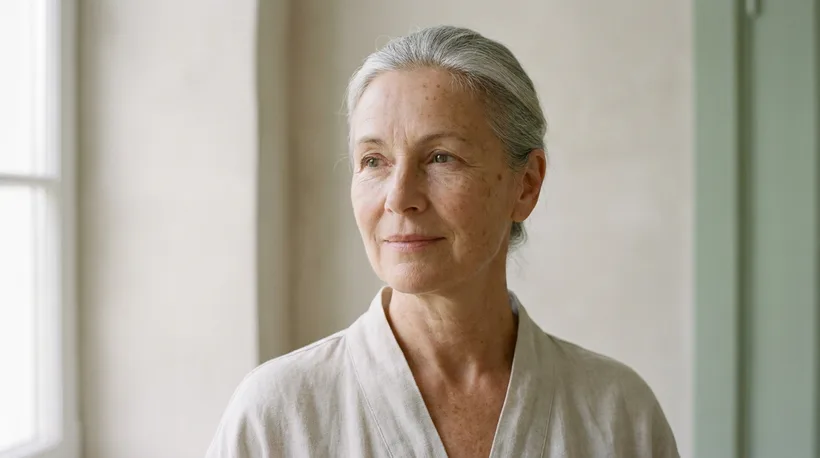
Collagen loss, cellular senescence, and the four mechanisms that drive visible ageing after 30 — and what actually slows them.

How six bioactive formulations work in sequence to support cellular communication, barrier integrity and the skin’s own structure.

UV exposure is the single largest driver of visible facial ageing, yet most people still treat sunscreen as a beach accessory rather than a daily essential.
Collagen loss, cellular senescence, and the four mechanisms that drive visible ageing after 30 — and what actually slows them.
How six bioactive formulations work in sequence to support cellular communication, barrier integrity and the skin’s own structure.

High-altitude spring water from the Pyrenees carries a mineral profile unlike anything in tap or filtered water. Here’s why that matters for your skin.

Sleep, stress, alcohol, sun exposure, and hydration — how daily choices compound into visible difference over decades.

The science of orography, mineral dissolution, and why water sourced above 1,000 metres has a fundamentally different composition.

Collagen production slows from our early thirties, but the pace is negotiable. What the research says about slowing it.

Thinnest to thickest is only half the story. Molecular weight, pH, and delivery systems determine whether your products work together or cancel each other out.
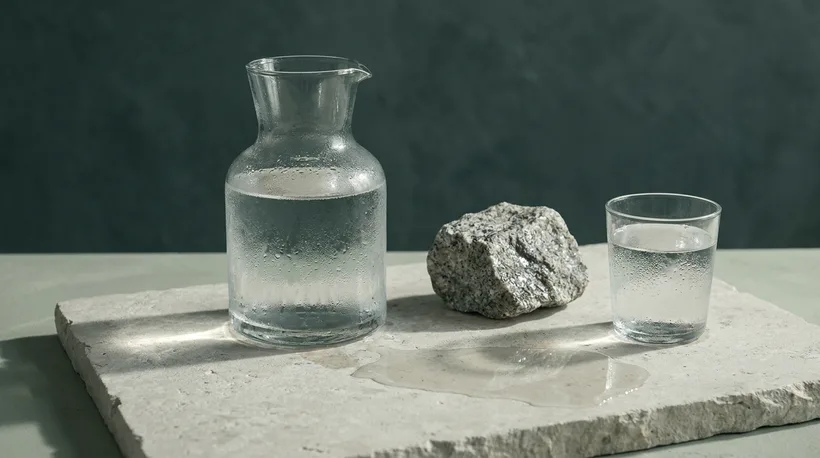
Tucked between France and Spain, Andorra’s Pyrenean springs produce water with a mineral balance that mirrors the skin’s natural hydration factors.

INCI lists, concentration order, and the difference between active and marketing ingredients — a field guide to decoding any product.

One is dynamic and reversible. The other is structural and needs a different approach. Knowing which you’re dealing with decides the plan.
UV exposure is the single largest driver of visible facial ageing, yet most people still treat sunscreen as a beach accessory rather than a daily essential.

The journey from high-altitude spring to finished formulation — how geography, geology, and craftsmanship converge in every bottle.

Can collagen molecules actually cross the skin barrier? The molecular weight debate, and what “hydrolysed” really means.

Your skin’s circadian rhythm means it needs protection by day and repair by night. Here’s how to build two routines that respect that biology.

Between 11 PM and 2 AM, your skin enters peak repair mode. Miss that window consistently, and the effects show faster than you’d think.

Chronic stress elevates cortisol, which breaks down collagen, thins the skin, and impairs barrier repair. The mechanism is now well understood.

Vitamin B3 does more than brighten. It strengthens the barrier, regulates sebum, minimises pores, and supports collagen — all in one molecule.
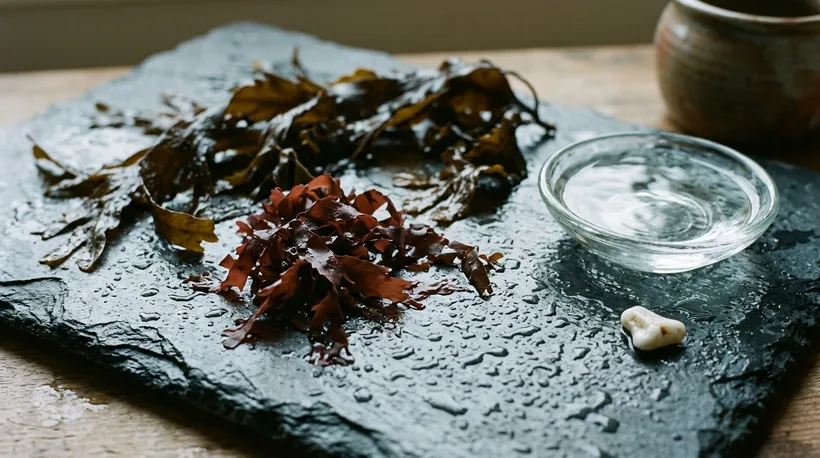
Marine algae have evolved UV-protective compounds, antioxidant systems, and moisture-retention mechanisms that translate directly to skin benefits.

Plant-derived signalling molecules versus lab-engineered amino acid chains. Both have merit, but their mechanisms and skin compatibility differ in important ways.

Daily physical scrubs create micro-tears. Weekly chemical exfoliation removes dead cells without compromising the barrier. The difference is structural.

Week 1: adjustment. Week 2: hydration shift. Week 3: texture improvement. Week 4: the foundation is set. A day-by-day guide to the transition.

Mediterranean humidity, coastal salt air, and alpine dryness — why a formulation made for one climate may underperform in another.

The “eight glasses a day” rule is a guess. What hydration research actually supports, and why water quality matters as much as quantity.

From the first prototype to the final six-formulation protocol — the iterations, the failures, and the breakthroughs that defined the journey.

Dry, oily, combination, or sensitive — most people misidentify their skin type. The Zero Lines analyser reads yours from a photo and ten focused questions.
No entries match that search. Try another term, or browse all.
See the six formulations, or let the analyser read your skin first and tell you where to begin.
Curated by Our Team
Collagen production slows from our early thirties, but the pace is negotiable. What the research says about slowing it.
From the first prototype to the final six-formulation protocol — the iterations, the failures, and the breakthroughs that defined the journey.
High-altitude spring water from the Pyrenees carries a mineral profile unlike anything in tap or filtered water. Here’s why that matters for your skin.
The Skin Analysis
Free. Sixteen questions, one photograph, and an address to send it to. A written assessment across eight markers, and the protocol that follows from it — no account, no payment, about four minutes.
Begin the free analysis