Ingredients
Why Pyrenean Mineral Water Is the Most Underrated Skincare Ingredient
Walk into any skincare store and you'll see shelves lined with retinol, vitamin C, hyaluronic acid, and peptides. These are the headline ingredients — the ones marketers put in bold on the front of the bottle. But flip that bottle over and look at the first ingredient on the INCI list. In 95% of cases, it's water.
Not just any water. Usually it's distilled, deionised, or purified tap water — stripped of everything except H₂O molecules. And that's the problem. Because the water you put on your skin matters far more than most people realise.
Not All Water Is Created Equal
Your skin doesn't just need moisture. It needs minerals. Magnesium, calcium, potassium, silica, and trace elements all play essential roles in cellular function, barrier integrity, and enzymatic activity. When you strip water of its mineral content, you're essentially removing the very components that help skin cells recognise and utilise that water.
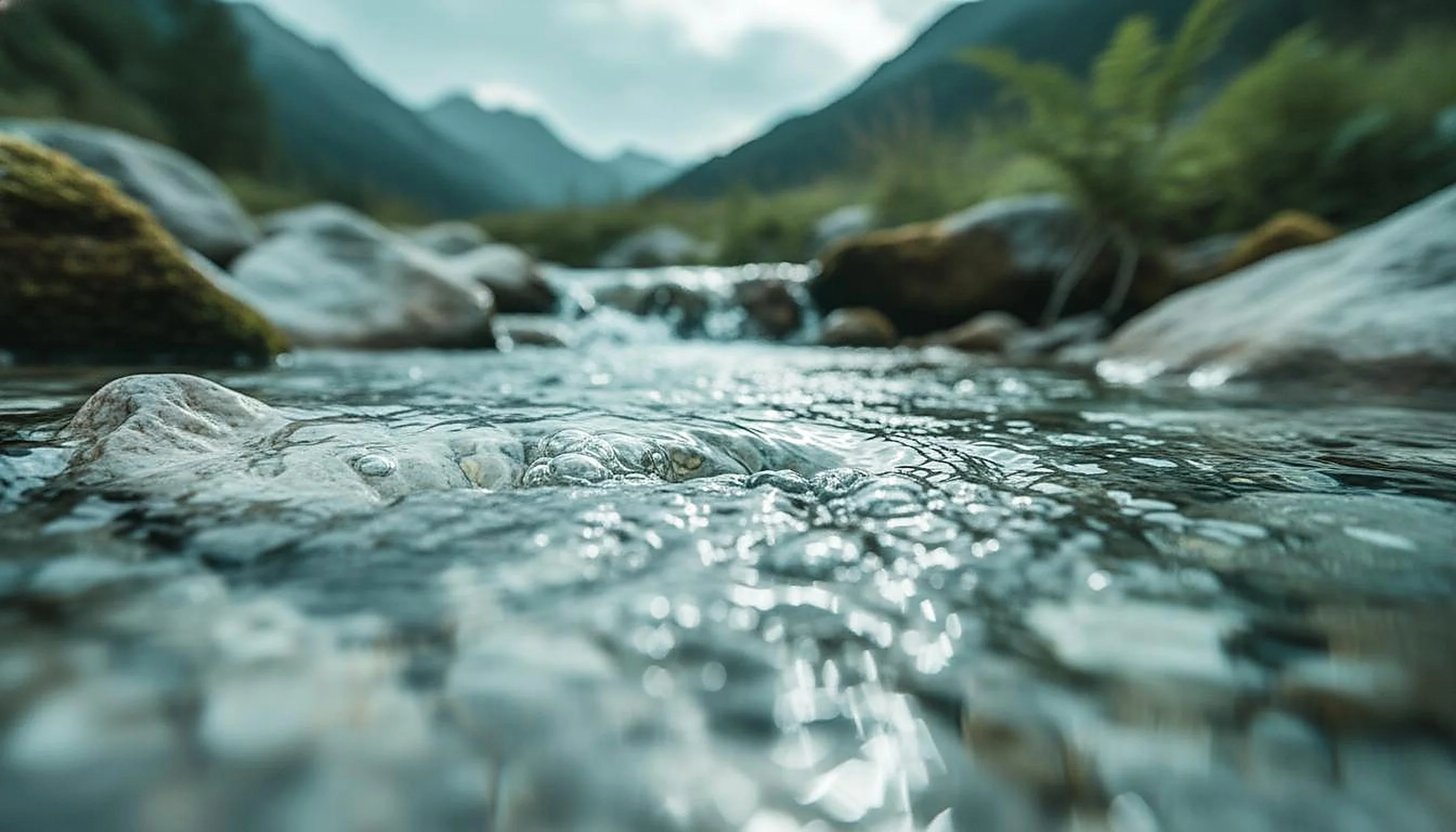
Pyrenean mineral water — the water we use as the base for every Zero Lines formulation — comes from springs at altitudes above 1,000 metres in the Pyrenees, primarily in Andorra. This water has spent decades percolating through granite, limestone, and gneiss, dissolving minerals along the way. The result is a mineral profile that closely mirrors the skin's natural moisturising factors (NMF).
The Mineral Profile That Matters
Here's what independent analysis of our Pyrenean source water reveals:
- Magnesium (28 mg/L): Supports over 300 enzymatic reactions in the body, including those involved in skin barrier repair and lipid synthesis. Topical magnesium has been shown to reduce inflammation and support wound healing.
- Calcium (45 mg/L): Essential for keratinocyte differentiation — the process by which skin cells mature and form the protective outer layer. Without adequate calcium, the barrier becomes porous and permeable.
- Silica (12 mg/L): A trace element that supports collagen synthesis and cross-linking. Silica-deficient skin tends to lose elasticity faster.
- Bicarbonates (180 mg/L): Help maintain the skin's natural pH balance, which sits around 5.5. Most tap water is alkaline (pH 7–8), which can disrupt the acid mantle.
- Low sodium (4 mg/L): Unlike seawater or some thermal waters, Pyrenean spring water is low in sodium, meaning it doesn't draw moisture out of the skin through osmotic pressure.
The total dissolved solids (TDS) measure around 280 mg/L — high enough to deliver meaningful mineral content, low enough to avoid residue or irritation on sensitive skin.
Altitude Changes Everything
Water sourced at high altitude carries a fundamentally different mineral signature than water from lowland springs or aquifers. The geology of the Pyrenees — young, folded mountains with extensive granite and metamorphic rock exposure — produces water with higher silica and lower sulphur content than thermal waters from volcanic regions.
Perhaps more importantly, high-altitude water is colder at the source. Cold water holds more dissolved oxygen and maintains its mineral profile more stably. By the time it reaches the surface, Pyrenean spring water has been underground for 15–25 years, protected from surface contamination and atmospheric pollutants.
We explore this in more depth in our article on how altitude changes water composition.
Why We Don't Just Use Tap Water
The skincare industry has trained consumers to focus on actives and ignore bases. But the base — the water and carrier system — determines whether those actives actually reach their target.
Tap water, even filtered tap water, contains chlorine, fluoride, and trace heavy metals. Distilled water is mineral-free. Reverse osmosis water is stripped of both contaminants and beneficial minerals. Thermal water, while mineral-rich, often has high sulphur or sodium content that can irritate sensitive skin.
Pyrenean mineral water offers a middle path: naturally pure, mineral-balanced, and compatible with the skin's own biochemistry. It's not an afterthought. It's the foundation.
"The water you put on your skin should be as considered as the actives you pair it with. Pyrenean mineral water isn't just a base — it's a functional ingredient in its own right." — Zero Lines Formulation Team, Barcelona
Where You'll Find It in Our Formulations
Every Zero Lines product uses Pyrenean mineral water as its primary solvent:
- BioSignal Facial Serum — The mineral water base delivers magnesium and calcium directly to keratinocytes, supporting the enzymatic reactions that keep the barrier strong.
- Environmental Shield Day Cream — Minerals combine with sweet almond oil and shea butter to create a hydration reservoir that releases moisture gradually throughout the day.
- Renewal and Repair Night Cream — Overnight, the mineral profile supports cellular turnover and repair processes that peak between 11 PM and 2 AM.
- Bio-Renewal Peeling Gel — The mineral base soothes as brown algae exfoliates, preventing the dryness and tightness common with acid-based peels.
Sources & References
- Maaroufi K et al. Mineral waters: chemical characteristics and health effects. Environmental Geochemistry and Health. 2020;42(11):3935-3952.
- Proksch E et al. Bathing in a magnesium-rich Dead Sea salt solution improves skin barrier function. International Journal of Dermatology. 2005;44(2):151-157.
- Ehrlich A et al. The therapeutic effects of balneotherapy and hydrotherapy. Clinics in Dermatology. 2002;20(4):362-366.
Experience the Difference
All six Zero Lines formulations use Pyrenean mineral water as their foundation. See which ones your skin needs most.
Analyse Your SkinRelated Reading


AI-Powered Analysis
See Your Skin Like Never Before
Upload a photo and answer 10 quick questions. Our AI analyses texture, tone, hydration, ageing signs, and lifestyle factors — then delivers a complete dermatologist-style report.
Analyse Your Skin