
If you could keep only one active for the rest of your life, niacinamide belongs on the shortlist. It isn't flashy. No dramatic peel, no tingle, nothing you feel working overnight. What it offers instead is reach: it quietly does more jobs than almost anything else on the shelf, and it rarely upsets the skin doing them.
What Niacinamide Actually Is
Niacinamide is the amide form of vitamin B3 (niacin). Unlike niacin, it doesn't cause flushing at high doses. It's water-soluble and stable in heat and light, and it plays nicely with almost every other ingredient. Formulators love it for that.
In skin, niacinamide is converted to NAD+ (nicotinamide adenine dinucleotide), a coenzyme that plays a central role in cellular energy metabolism. Without adequate NAD+, skin cells can't function optimally. With it, they repair faster, produce more collagen, and maintain better barrier integrity.
What Niacinamide Does for Skin

Niacinamide is unusual in that it has multiple well-documented mechanisms, not just one:
1. Strengthens the Barrier
Niacinamide raises the skin's output of ceramides, free fatty acids and cholesterol, the three building blocks of its lipid barrier. A sturdier barrier holds water in, so skin feels less tight, turns less reactive, and copes better with cold wind or a heated room. It holds on to water; how much you drink decides how much there is to hold.
2. Regulates Sebum
At concentrations of 2–4%, niacinamide reduces sebum production by normalising the activity of sebaceous glands. This isn't drying — it's regulatory. Skin becomes less oily without becoming tight or dehydrated.
3. Minimises Pores
Pores appear larger when they're clogged with sebum and dead skin cells. By reducing sebum and improving skin elasticity, niacinamide makes pores appear smaller over time. It's not actually changing pore size (that's genetically determined), but it changes how they look — which is what most people care about.
4. Brightens and Evens Tone
Niacinamide slows the handover of melanin from the cells that make it to the surface cells that carry it upward. Over weeks of steady use, dark spots look softer and skin tone reads more even, and it does this without the sting or rebound darkening that harsher lighteners such as hydroquinone can trigger.
5. Supports Collagen
Niacinamide nudges the skin to make more of its own collagen, and it slows glycation, the process where stray sugar molecules stiffen the fibres you already have. That is a different job from feeding skin hydrolysed collagen from the outside. Both have their place as skin ages.
6. Reduces Inflammation
Niacinamide has documented anti-inflammatory activity, which is why it turns up so often in formulations meant for skin that reddens or flushes easily. It is a cosmetic ingredient and not a medicine: it does not treat a condition, and redness that is persistent, painful or spreading is a conversation for a dermatologist rather than a bottle.
The Optimal Concentration
Niacinamide is the amide form of vitamin B3 — water-soluble, stable in heat and light, and comfortable beside almost every other ingredient. That compatibility is most of why formulators reach for it.
The literature clusters around 2–5%. Below 2% the effect is marginal; above 5% there is little additional benefit and a rising chance of irritation in people prone to it. Our Renewal and Repair Night Cream is formulated inside that range. We will publish the exact figure when there is a finished batch to state it against — quoting one before then would be a number we could not stand behind.
What Niacinamide Can Be Layered With
Niacinamide works alongside virtually everything:
- With vitamin C: The old advice to separate them has been debunked. They work synergistically.
- With retinol: Niacinamide reduces the irritation that retinol causes, making them an excellent pair.
- With AHAs/BHAs: Niacinamide supports barrier repair after exfoliation.
- With peptides: Both support collagen through different mechanisms.
- With hyaluronic acid: Niacinamide strengthens the barrier; hyaluronic acid hydrates. Complementary functions.
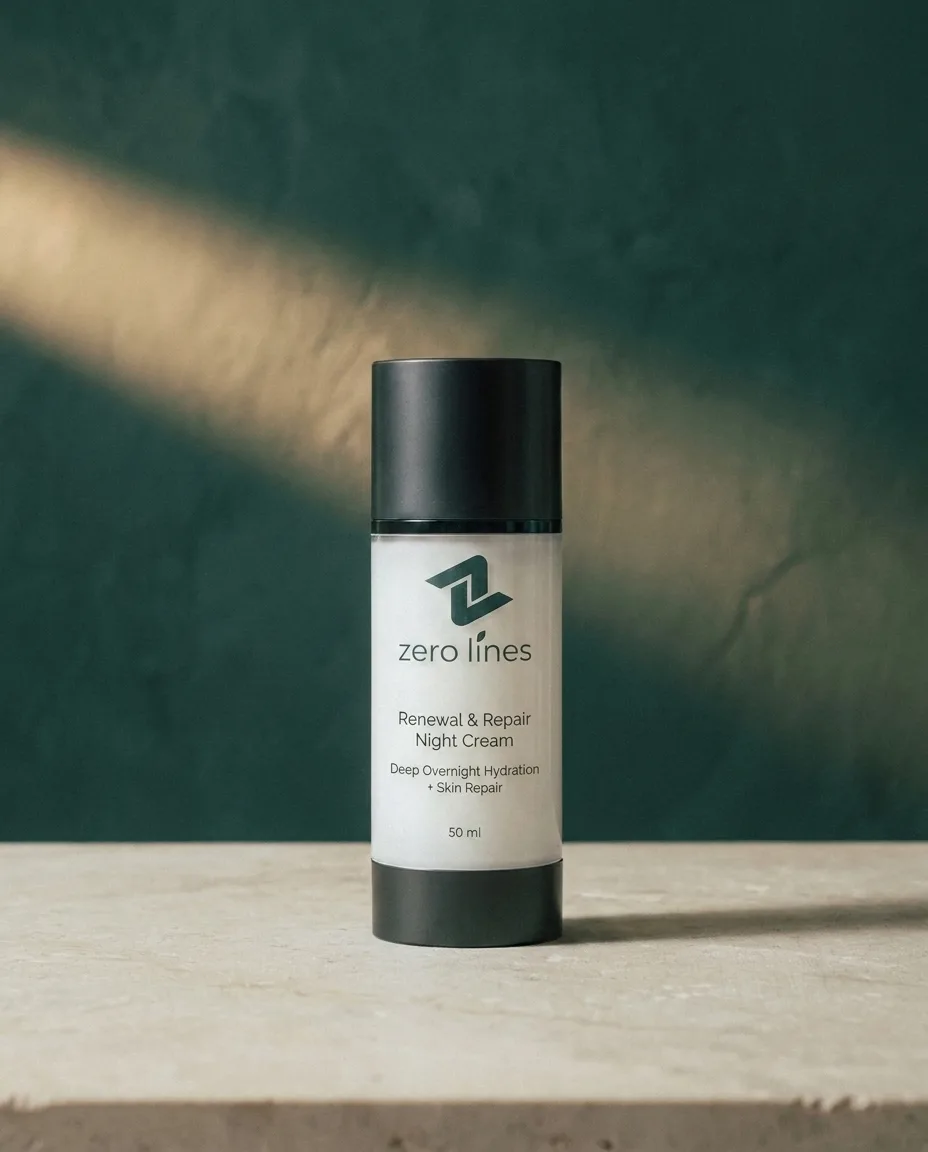
Renewal and Repair Night Cream
You wake to skin that looks rested and feels comfortable, the very first morning. Over weeks, niacinamide and the overnight barrier work are designed to support the structure that holds the face up.
View Product →The Skin Analysis
See your skin as we see it
Free. Sixteen questions, one photograph, and an address to send it to. A written assessment across eight markers, and the protocol that follows from it — no account, no payment, about four minutes.
Begin the free analysisWho Should Use It
Short answer: almost everyone. Niacinamide is suitable for all skin types, all ages, and all concerns. It's particularly valuable if you're:
- Over 30 and noticing the first signs of ageing
- Dealing with enlarged pores or oily skin
- Struggling with hyperpigmentation or uneven tone
- Experiencing sensitivity or barrier impairment
- Building a multi-step routine and need an ingredient that plays well with others

How Niacinamide Works in the Skin
Niacinamide, also known as vitamin B3 or nicotinamide, is one of the most studied ingredients in skincare. Retinoids and acids tend to work by irritating the skin into repair mode. Niacinamide takes the opposite route: it supports the skin's own processes, which is why even sensitive skin usually tolerates it.
At the cellular level, niacinamide is a precursor to NAD+ and NADP+, coenzymes involved in hundreds of metabolic reactions. In skin specifically, it supports barrier repair by stimulating ceramide synthesis, reduces inflammation by inhibiting cytokine release, regulates sebum production, and inhibits melanin transfer from melanocytes to keratinocytes — reducing hyperpigmentation.
Concentration Matters
Niacinamide earns its keep across a wide concentration range, but 2–5% is the sweet spot for most concerns. At 2%, the barrier firms up noticeably. At 4–5%, pores, fine lines and uneven tone all start to look better. Past 10% there is nothing extra to gain, and some skin simply flushes.
Niacinamide sits in the Renewal and Repair Night Cream, where the overnight hours suit it — alongside hydrolysed collagen in a restorative lipid matrix, on a base of Pyrenean mineral water. The Bio-Signal Face Serum is built around a different mechanism and does not contain it.
"If I could only recommend one ingredient for skin over 30, it would be niacinamide. It does almost everything well, and almost everyone tolerates it."
— Zero Lines Formulation Team
Sources & References
- Draelos ZD et al. The effect of niacinamide on reducing cutaneous pigmentation. British Journal of Dermatology. 2002;147(1):20-31. The effect of niacinamide on reducing cutaneous pigmentation and suppression of melanosome transfer
- Bissett DL et al. Niacinamide: A B vitamin that improves aging facial skin appearance. Dermatologic Surgery. 2005;31(7):860-865. Niacinamide: A B vitamin that improves aging facial skin appearance
- Tanno O et al. Nicotinamide increases biosynthesis of ceramides as well as other stratum corneum lipids to improve the epidermal permeability barrier. Journal of Dermatological Science. 2000;24(3):228-237. Nicotinamide increases biosynthesis of ceramides as well as other stratum corneum lipids to improve the epider
Discover If Niacinamide Belongs in Your Routine
The skin analysis reads eight appearance markers from one photograph and returns a written assessment with the formulations we would suggest, and the ones you can skip.
Analyse Your SkinRelated Reading




Explore Zero Lines
Niacinamide sits in the Renewal and Repair Night Cream, alongside hydrolysed collagen in a restorative lipid matrix.