
The most common skincare advice is also the most incomplete: "Apply products from thinnest to thickest." While texture is one factor, it's far from the whole story. If you're layering a vitamin C serum over a peptide cream, you're probably wasting both. If you're applying retinol before an AHA exfoliant, you're asking for irritation.
Proper layering is about chemistry, not just consistency. Here's what actually determines whether your products work together or against each other.
The Three Rules of Layering Skincare
1. pH Comes First
Active ingredients that require a specific pH to penetrate should be applied closest to clean skin, before anything else shifts the skin's pH. This includes:
- Vitamin C (L-Ascorbic Acid): Requires pH 2.5–3.5. Apply first on dry skin.
- AHAs (Glycolic, Lactic Acid): Require pH 3.5–4.0. Apply after vitamin C if using both, or first if vitamin C isn't in your routine.
- BHAs (Salicylic Acid): Require pH 3.0–4.0. Same placement as AHAs.
Apply a moisturiser (pH 5.5–6.5) before these actives and you've raised the skin's pH. Much of the active never gets through. The order does half the work.
2. Molecular Weight Determines Depth
Smaller molecules penetrate deeper. Larger molecules sit closer to the surface. The same principle decides whether hydrolysed collagen can get past the surface at all. The general order:
- Water-based serums with small molecules (peptides, antioxidants)
- Oil-based serums with medium molecules (plant oils, squalane)
- Emulsions and creams (mixed water and oil phases)
- Occlusive balms and heavy moisturisers
Applying a heavy cream before a serum is like putting a raincoat on before trying to absorb water through your skin. The cream creates a barrier that blocks everything applied on top.
3. Some Ingredients Cancel Each Other Out
Some combinations do worse than nothing. They neutralise each other:
- Retinol + Vitamin C: Retinol requires an alkaline pH; vitamin C requires acidic. Use vitamin C in the morning, retinol at night.
- Retinol + AHAs/BHAs: Both increase cell turnover. Together, they over-exfoliate and damage the barrier. Alternate nights.
- Benzoyl Peroxide + Vitamin C: Benzoyl peroxide oxidises vitamin C on contact, rendering both ineffective.
- Copper Peptides + Vitamin C: Copper oxidises vitamin C. Separate by at least 30 minutes or use at different times of day.
Not every pairing is a fight. Niacinamide, for one, sits comfortably next to almost anything, which is why it turns up in so many well-built routines.
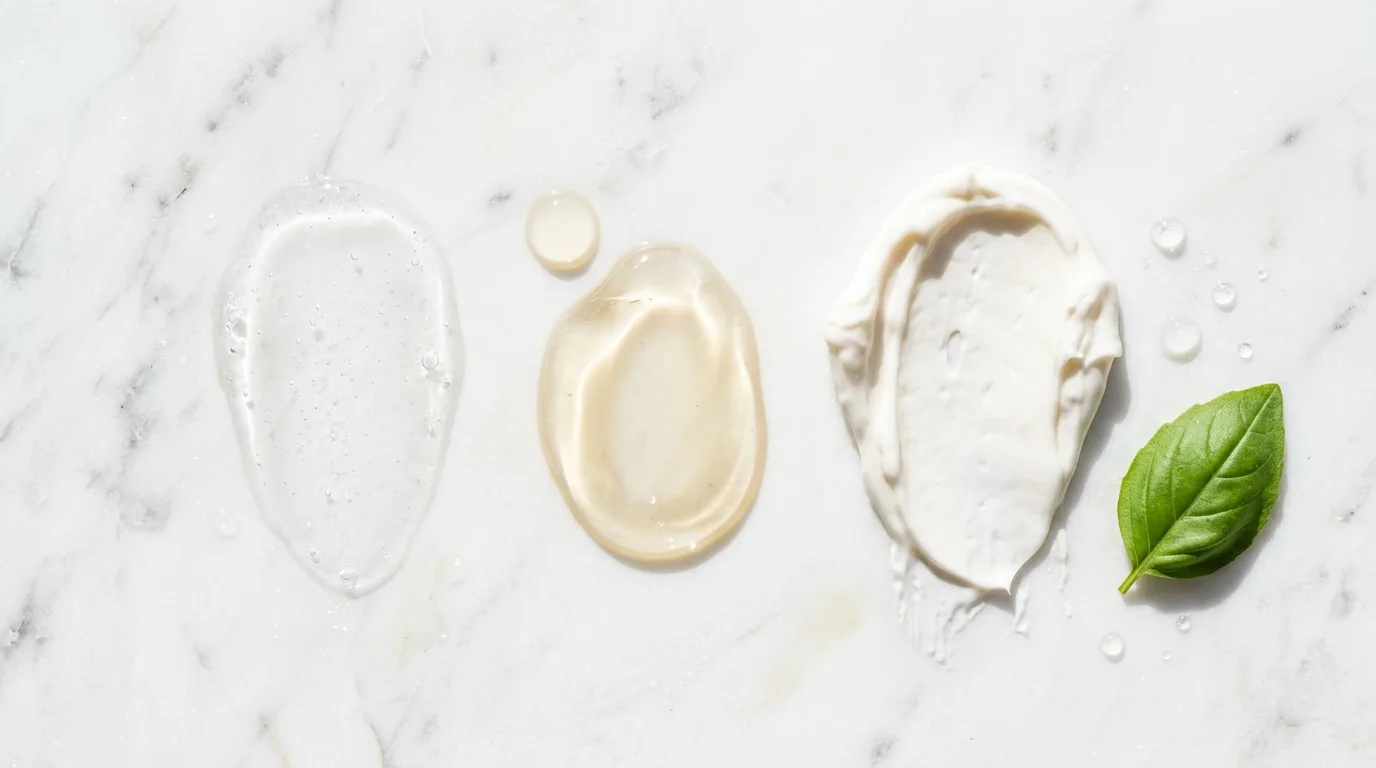
The Zero Lines Layering Sequence
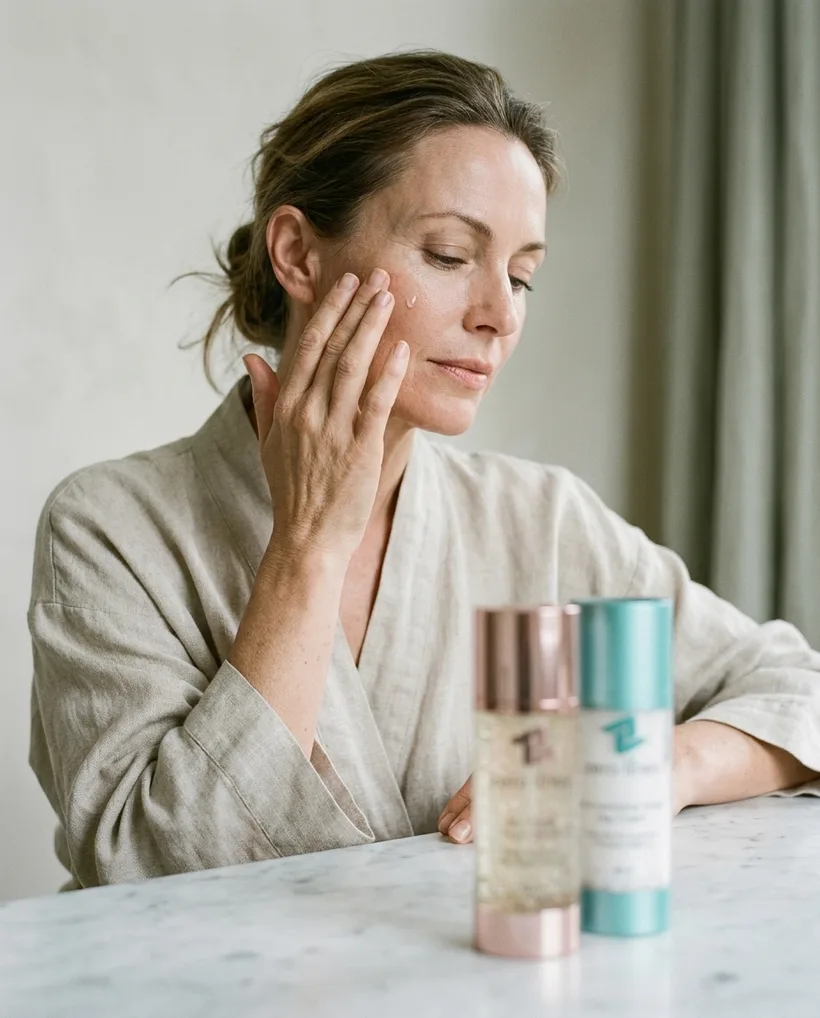
Our 6-step protocol was built around these principles. Here's how to layer the full system:
Morning:
- Cleanse (if needed — many people do fine with just water in the morning)
- Bio-Signal Face Serum — water-based, small molecules, pH-balanced
- Precision Collagen Renewal Line Corrector — peptide concentrate
- Environmental Shield Day Cream — emulsion for environmental defence, then your SPF over it
Evening:
- Cleanse
- Bio-Renewal Peeling Gel — 1–2x weekly only, on clean dry skin
- Bio-Signal Face Serum
- Precision Collagen Renewal Line Corrector or Refill
- Renewal and Repair Night Cream — rich occlusive layer
How Long Should You Wait Between Skincare Layers?
pH-dependent actives go closest to clean skin. Vitamin C wants pH 2.5–3.5, AHAs 3.5–4.0, BHAs 3.0–4.0. Put a moisturiser at pH 5.5–6.5 underneath them and much of the active never gets through.
The internet is full of advice to wait 20–30 minutes between layers. In most cases, this is unnecessary. Modern formulations are designed to absorb within 1–2 minutes. The exceptions:
- Acid exfoliants: Wait 5 minutes before applying anything else, to allow the pH to work.
- Vitamin C: Wait 2–2 minutes if you're following with a product that has a significantly different pH.
- Retinoids: Wait 10–15 minutes before moisturising, to maximise penetration.
For everything else, 30–60 seconds is enough — time for the product to spread and begin absorbing. And nobody stands at the mirror with a stopwatch. A workable compromise: apply your pH-dependent active first, brush your teeth, then carry on with the rest of your routine. Those 2–2 minutes of tooth-brushing give the pH time to normalise without adding a single step to your day.
For the Zero Lines Protocol, no wait times are needed between steps. The formulations are pH-compatible and designed to layer cleanly.
Can You Use Too Many Skincare Products?
The skincare industry profits from selling you more products. But skin has limits. Overload the barrier with too many actives, even individually good ones, and you get inflammation and sensitivity. Irritated skin ages faster, not slower.
If you're using the full Zero Lines Protocol, resist the urge to add extra serums, acids, or retinoids. The six formulations were calibrated to work together at concentrations that deliver results without overwhelming the skin. More does not multiply the benefit. It divides it.
Why Does Skincare Layering Order Matter?
Skincare products interact. Apply a rich cream before a serum, and the serum can't penetrate the occlusive film. Apply an acid before a peptide, and the low pH may degrade the peptide structure. Apply oil before water-based products, and the water beads up on the oil surface rather than absorbing.
The principle: thinnest to thickest, water-based before oil-based, pH-dependent actives before pH-neutral ones. None of it is arbitrary. Water-based products need direct skin contact to deliver their actives. Oil-based products create a barrier that locks everything in but also blocks anything applied on top.
"Every layering rule serves the same purpose: give each ingredient the conditions it needs to do its work."
— Zero Lines Formulation Team
Sources & References
- Draelos ZD. The art and science of moisturizers. Clinics in Dermatology. 2018;36(6):687-695. The science behind skin care: Moisturizers — Draelos ZD. Journal of Cosmetic Dermatology. 2018;17(2):138-144.
- Purnamawati S et al. The role of moisturizers in addressing various kinds of dermatitis. Clinical Medicine & Research. 2017;15(3-4):75-87.
- Loden M. Role of topical emollients and moisturizers in the treatment of dry skin barrier disorders. American Journal of Clinical Dermatology. 2003;4(11):771-788.
Get Your Personalised Sequence
The skin analysis recommends the exact order and products for your skin type, concerns, and climate.
Build My RoutineRelated Reading



The Skin Analysis
See your skin as we see it
Free. Sixteen questions, one photograph, and an address to send it to. A written assessment across eight markers, and the protocol that follows from it — no account, no payment, about four minutes.
Begin the free analysis
Explore Zero Lines
Build your perfect sequence with the Bio-Signal Face Serum, Precision Collagen Renewal Line Corrector, and Environmental Shield Day Cream for morning protection.