
The skincare industry has sold us a dangerous idea: that scrubbing your face daily is virtuous. Exfoliating beads, gritty cleansers, rotating brushes and even homemade sugar scrubs are all marketed on the promise of "revealing fresh skin". What they actually reveal, over time, is a compromised barrier and skin that reacts to almost everything. Visible ageing arrives sooner, not later.
What Daily Scrubs Actually Do
Physical exfoliants work by abrasion. They remove dead skin cells through friction, and they cannot tell the difference between dead cells ready to shed and living cells that are still attached. The result is micro-tears in the stratum corneum: tiny wounds that trigger inflammation and speed up trans-epidermal water loss. Each scrub leaves the barrier a little worse at its job.
Over time, daily scrubbing creates a cycle of damage and repair that the skin can't keep up with. The barrier becomes chronically compromised. Sensitivity increases. Products that once felt fine start to sting. And paradoxically, the skin produces more dead cells to protect itself — the exact opposite of what exfoliation is supposed to achieve.
Chemical Exfoliation: A Smarter Approach

Chemical exfoliants work differently. AHAs (glycolic, lactic acid) and BHAs (salicylic acid) dissolve the "glue" that holds dead skin cells together, so those cells shed naturally without abrasion. Enzymatic exfoliants, like the brown algae extract in our Peeling Gel, do the same job through biological rather than chemical action.
The key advantage: chemical and enzymatic exfoliation target only the dead cells. Living tissue beneath is left alone. No micro-tearing, no inflammation.
How Often Should You Exfoliate?
Physical scrubs work by abrasion and cannot tell a dead cell ready to shed from a living one still attached. The result is micro-tearing, inflammation and faster water loss.
Your skin's natural cell turnover cycle takes approximately 28 days in young adults, extending to 40–50 days by age 50. This means new cells are constantly being produced at the base of the epidermis and migrating upwards. By the time they reach the surface, they're dead and ready to shed.
Daily exfoliation disrupts this cycle. It removes cells before they're ready, forcing the skin to accelerate production. That might sound beneficial, but accelerated turnover without adequate repair time produces immature, poorly formed cells that can't do their job properly.
Weekly exfoliation, meaning one or two sessions a week, provides enough stimulation to clear congestion and encourage renewal without overwhelming the skin's repair capacity. The skin gets a nudge, then time to rebuild. That rhythm is the whole point.
The Zero Lines Approach
Our Bio-Renewal Peeling Gel was designed specifically for weekly use. The citric acid complex is held at a once-a-week strength, and the brown algae extract provides gentle enzymatic exfoliation that clears dead cells without acidity or abrasion. Aloe vera juice soothes as it works. Pyrenean mineral water maintains hydration throughout the process.
The result is skin that feels smoother and looks more radiant after each use, without the redness and tightness that daily scrubs cause. Used once or twice weekly as part of the Zero Lines Protocol, it also clears the way for the peptides and hydrators applied afterwards. Freshly exfoliated skin simply takes them in more readily.
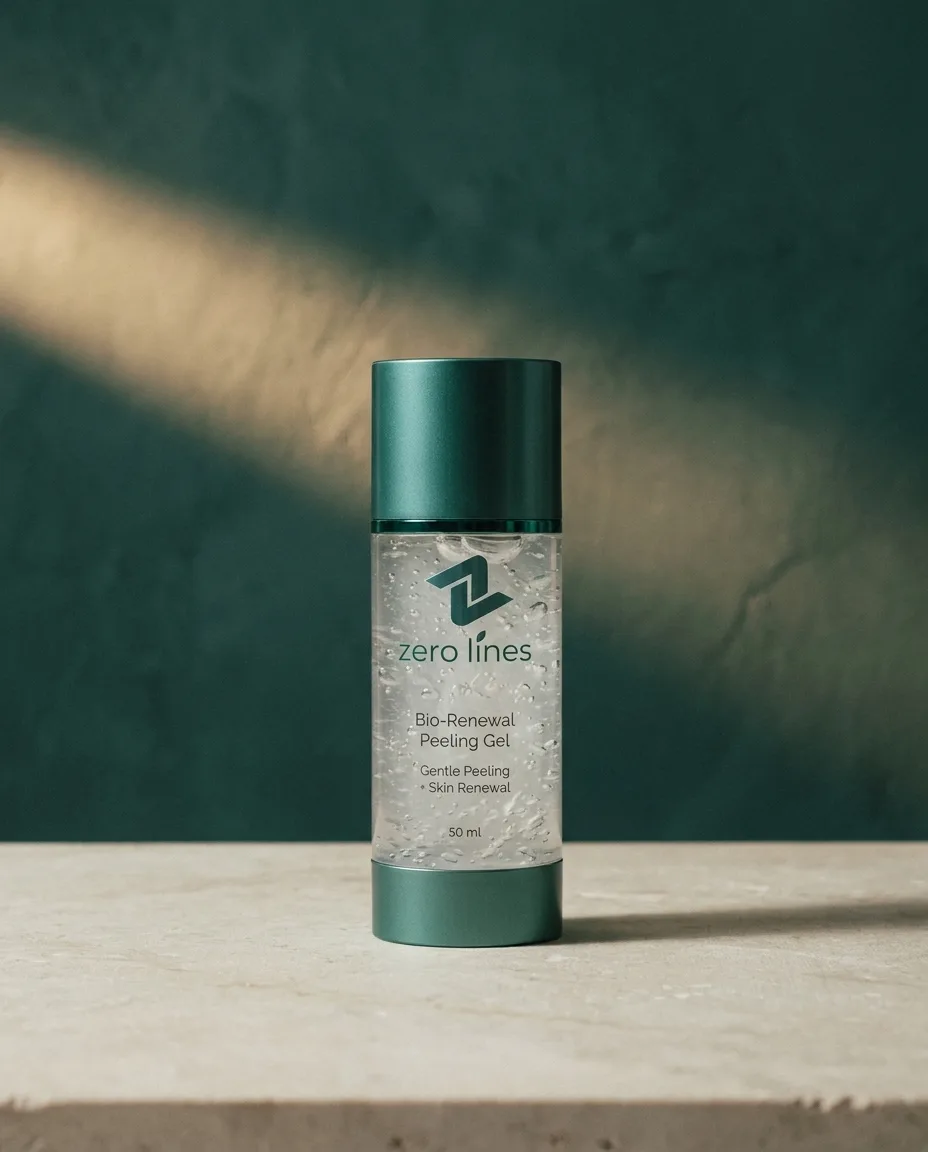
Bio-Renewal Peeling Gel
The surface looks clearer and catches the light more evenly the same evening. Used once a week, it keeps the skin ready to receive everything that follows it in the protocol.
View Product →The Skin Analysis
See your skin as we see it
Free. Sixteen questions, one photograph, and an address to send it to. A written assessment across eight markers, and the protocol that follows from it — no account, no payment, about four minutes.
Begin the free analysis
Signs You're Over-Exfoliating
If you're experiencing any of these, cut back immediately:
- Persistent redness or flushing
- Products that previously felt fine now sting or burn
- Unusual dryness or tightness
- Increased breakouts (the skin produces more oil to compensate for barrier damage)
- Shiny but tight skin — a sign of a thinned, compromised barrier
Recovery from over-exfoliation typically takes 2–4 weeks of gentle, minimal skincare: cleanser, moisturiser, sunscreen, and nothing else. If you're unsure how to space the peeling step around the rest of your routine once your skin has settled, our FAQ walks through it.
How Skin Cell Turnover Changes With Age
Your skin naturally exfoliates itself. In young adults the full turnover cycle, from basal cell formation to shedding at the surface, takes roughly 28 days. By age 50 it can stretch towards 50 days. Dead cells linger, the complexion dulls, and pigmentation takes longer to fade.
Exfoliation accelerates this process, but the key is matching the frequency to your skin's capacity to regenerate. Exfoliate too often, and you strip the protective barrier before it can rebuild. Exfoliate too rarely, and dead cells accumulate, blocking actives and dulling the complexion.
Physical vs. Chemical vs. Enzymatic Exfoliation
Physical exfoliation uses particles or tools to buff dead cells away. The smoothness is immediate, but so is the risk of micro-tears, especially with harsh scrubs. Chemical exfoliation uses acids (AHAs, BHAs, PHAs) to dissolve the bonds between cells; it is more uniform and gentler when used correctly. Enzymatic exfoliation uses biological enzymes, from fruit sources such as papain and bromelain or from marine sources, to break down dead cells without acidity.
Our Bio-Renewal Peeling Gel uses a citric acid complex held at a gentle, once-weekly strength, with brown algae polysaccharides conditioning alongside it. The acid loosens dead cell bonds with the precision of a chemical exfoliant but the gentleness of an enzyme. It's effective enough to use weekly, gentle enough for sensitive skin.
"The real question is not whether to exfoliate. It is how often, and with what. Weekly enzymatic exfoliation delivers the renewal without the barrier damage that daily scrubs cause."
— Zero Lines Formulation Team
Sources & References
- Kornhauser A et al. The effects of topically applied glycolic acid and salicylic acid. Journal of Cosmetic Dermatology. 2010;9(1):40-45. The cosmeceutical realm (Draelos ZD. Clin Dermatol. 2008;26(6):627-632)
- Draelos ZD. The cosmeceutical realm. Clinics in Dermatology. 2008;26(6):627-632.
- Tran D et al. An anti-aging skin care system containing alpha hydroxy acids and vitamins improves the biomechanical parameters of facial skin. Clinical, Cosmetic and Investigational Dermatology. 2015;8:9-17.
Build a Gentle Exfoliation Routine
The skin analysis reads eight appearance markers from one photograph and returns a written assessment, including how often we would suggest exfoliating.
Analyse Your SkinRelated Reading



Explore Zero Lines
Experience gentle weekly renewal with the Bio-Renewal Peeling Gel, formulated with brown algae extract and Pyrenean mineral water.