Science
How Altitude Changes Water — And Why Your Skin Cares
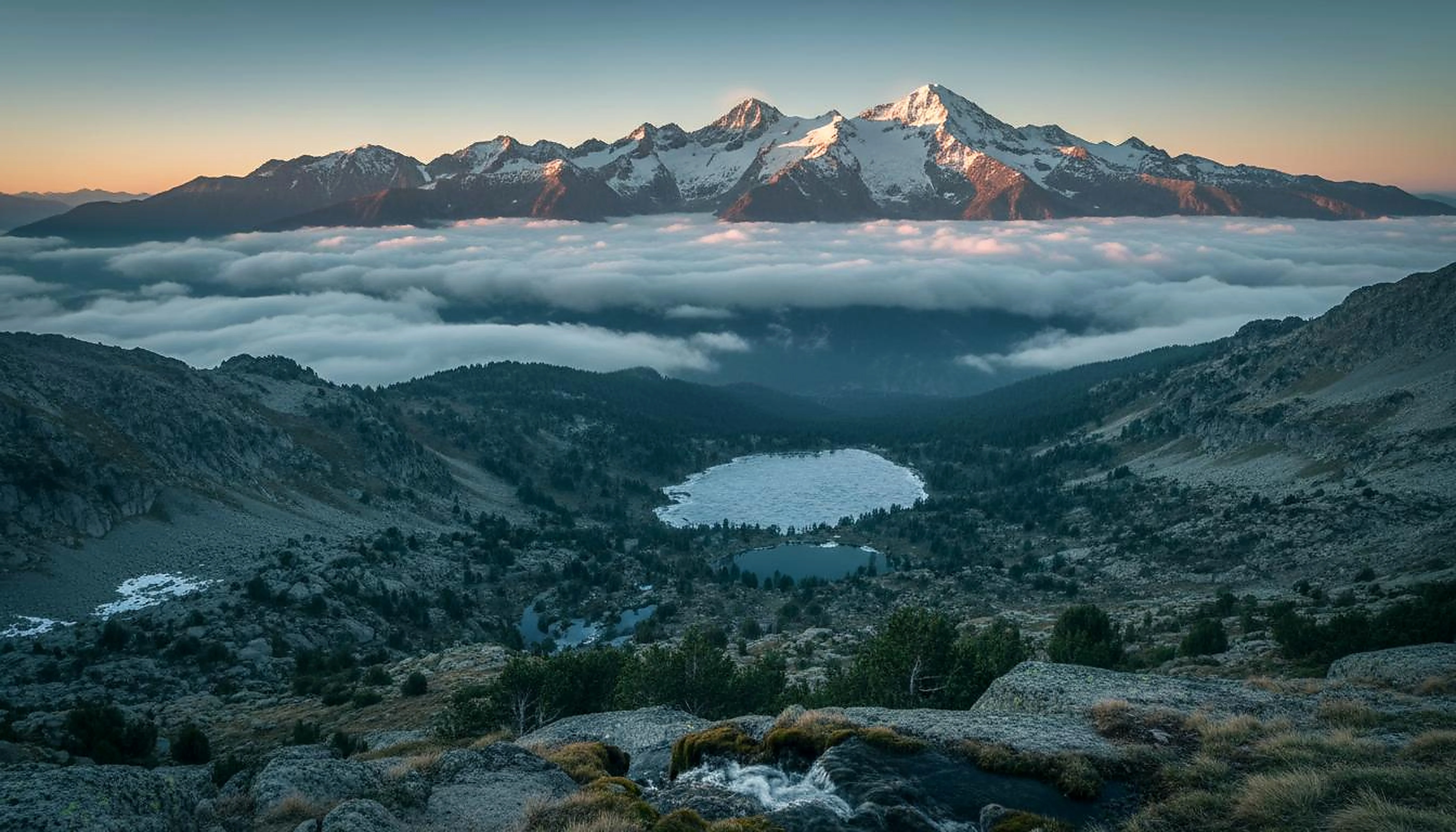
Water is water, most people assume. H₂O. Simple. But the water that emerges from a spring at 2,000 metres in the Pyrenees is chemically distinct from the water that comes out of a kitchen tap in Barcelona — and that distinction has real implications for skincare.
Orography and Mineral Dissolution
Orography is the study of how mountains influence weather, climate, and geology. When moist air masses rise against mountain ranges like the Pyrenees, they cool, condense, and precipitate as snow or rain. This water then percolates downward through layers of rock — granite, limestone, gneiss, schist — dissolving minerals as it goes.
The key variable is time. Water that moves quickly through porous sandstone picks up relatively few minerals. Water that seeps slowly through dense metamorphic rock, as it does in the high Pyrenees, has years — sometimes decades — to dissolve and accumulate minerals.
Altitude matters too. Higher springs draw from deeper aquifers where water has spent more time underground. Lower springs often capture water that has travelled a shorter path. The result is that high-altitude springs typically produce water with higher total dissolved solids and more complex mineral profiles.
Cold Water Holds More
Cold water can dissolve more oxygen and maintain mineral stability better than warm water. Springs at altitude emerge at temperatures between 6°C and 12°C year-round, compared to lowland springs that may reach 15°C or higher in summer.
This cold temperature preserves the water's mineral profile from source to bottle. It also means the water hasn't been subjected to the thermal cycling that can cause mineral precipitation and alter ratios.
The Granite Difference
The Pyrenees are geologically young mountains with extensive granite and metamorphic rock exposure. Granite is rich in quartz (silicon dioxide), feldspar, and mica. As water percolates through granite, it dissolves silica — a trace element that supports collagen synthesis and skin elasticity.
This is why Pyrenean mineral water has a distinctly higher silica content than water from sedimentary regions like the Paris Basin or the London Aquifer. It's also why the water has lower sulphur content than volcanic spring waters from regions like Iceland or Japan.
What This Means for Skincare
When formulating skincare, the water base is not neutral. It actively interacts with other ingredients and with the skin itself.
Water high in calcium and magnesium supports the enzymes involved in skin barrier repair. Water with balanced bicarbonates helps maintain the acid mantle. Water with silica supports collagen cross-linking. Water low in sodium doesn't create osmotic stress that draws moisture out of skin cells.
By contrast, distilled water — commonly used in cosmetics for its purity — contains none of these beneficial minerals. It's a blank slate. And tap water, while mineralised, often contains chlorine, fluoride, and variable mineral ratios that can disrupt rather than support skin function.
This is the reasoning behind our choice to source Pyrenean mineral water for every Zero Lines formulation. It's not marketing. It's biochemistry.
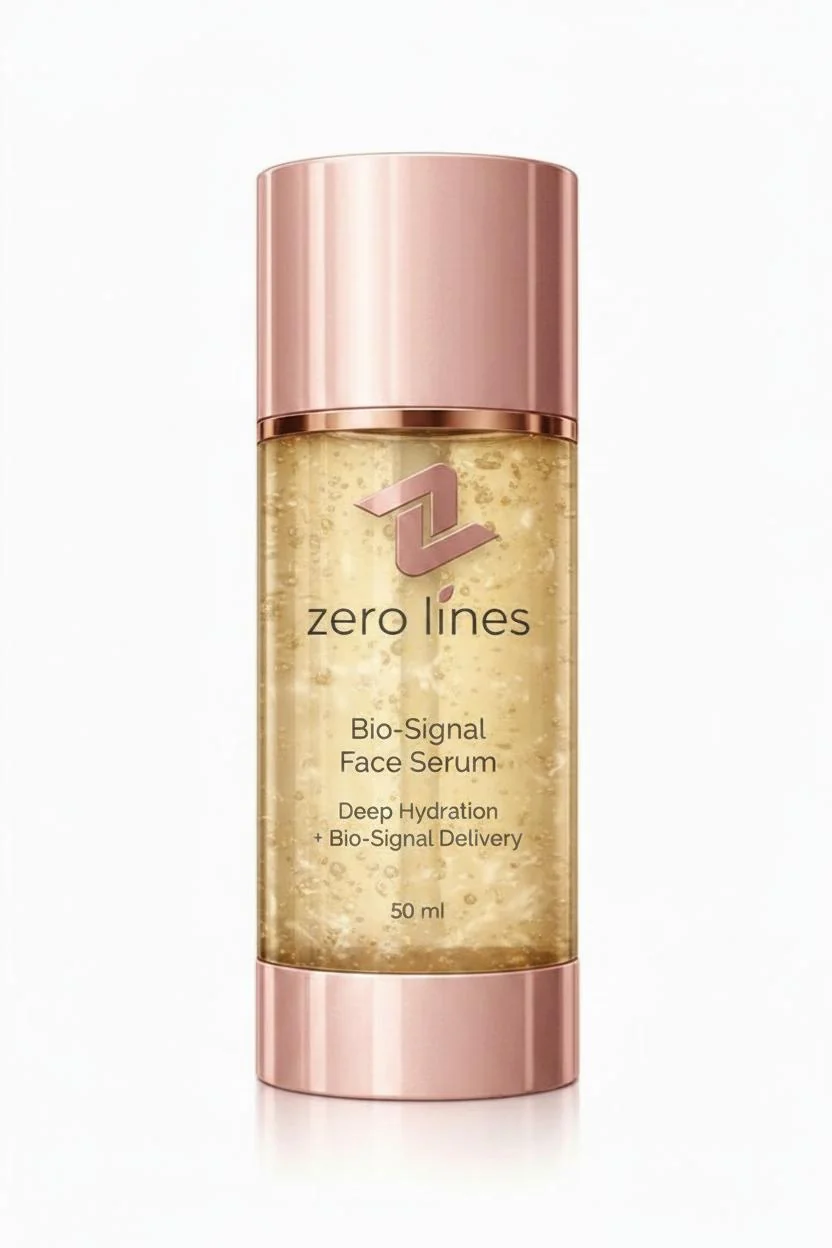
BioSignal Facial Serum
Our high-velocity serum uses Pyrenean mineral water as its primary delivery vehicle, carrying magnesium, calcium, and silica deep into the skin surface.
View Product →AI-Powered Analysis
See Your Skin Like Never Before
Upload a photo and answer 10 quick questions. Our AI analyses texture, tone, hydration, ageing signs, and lifestyle factors — then delivers a complete dermatologist-style report.
Analyse Your SkinProtecting the Source
The springs we source from are protected by Andorran environmental law, which designates the surrounding watershed as a protected zone. No industrial agriculture, no mining, no development within a radius that ensures contamination risk is effectively zero.
The water is collected at the source without pumping — it flows naturally by gravity. This preserves the dissolved gas content and prevents the oxidation that can occur when water is mechanically extracted.
In an era where "clean beauty" often means little more than marketing, we're transparent about our supply chain because we believe the source matters as much as the formula.
The Physics of Altitude and Water
At sea level, water boils at 100°C. At 2,000 metres — roughly the elevation of our Andorran spring — it boils at 93°C. This lower boiling point affects extraction processes, preservation methods, and the behaviour of dissolved gases. But the more relevant effect for skincare is what happens to water as it percolates through mountain rock.
Water at altitude spends more time underground, moving slowly through fractured granite and limestone. This extended contact dissolves more minerals — calcium, magnesium, silica, bicarbonates — creating the mineral-rich profile that makes Alpine spring water distinctive. Lower atmospheric pressure at altitude also means less dissolved oxygen, which affects microbial populations and chemical reactivity.
Altitude and Your Skin
Your skin behaves differently at altitude too. The thinner atmosphere filters less UV — approximately 10% more UVB and 12% more UVA for every 1,000 metres of elevation. The lower humidity accelerates transepidermal water loss. And the colder temperatures reduce blood flow to the skin, slowing nutrient delivery and waste removal.
This is why mountain residents and skiers often experience premature ageing despite living in seemingly pristine environments. The combination of intense UV, low humidity, and cold creates a uniquely damaging environment that demands specialised protection: richer moisturisers, stronger SPF, and barrier-reinforcing ingredients.
"Altitude changes everything — not just the water, but how your skin responds to it. The same routine that works at sea level may be inadequate at 1,800 metres."
— Zero Lines Clinical Advisory Board
Sources & References
- Maaroufi K et al. Mineral waters: chemical characteristics and health effects. Environmental Geochemistry and Health. 2020;42(11):3935-3952.
- Ferreira M et al. Mineral composition of natural mineral waters. Journal of Food Composition and Analysis. 2010;23(4):335-341.
- Proksch E et al. Bathing in a magnesium-rich Dead Sea salt solution improves skin barrier function. International Journal of Dermatology. 2005;44(2):151-157.
Experience Alpine Water on Your Skin
Every Zero Lines formulation begins with Pyrenean mineral water. Discover which products your skin needs.
Analyse Your SkinRelated Reading


